Last checked: October 2026
The county ordinance covers unincorporated Pinellas only. The 24 cities and towns, including St. Petersburg, Clearwater and Largo, each set their own rules. Most Pinellas addresses can't legally do nightly rentals — yours might be one that can. Here's how to tell which rulebook applies, and what the county's says.
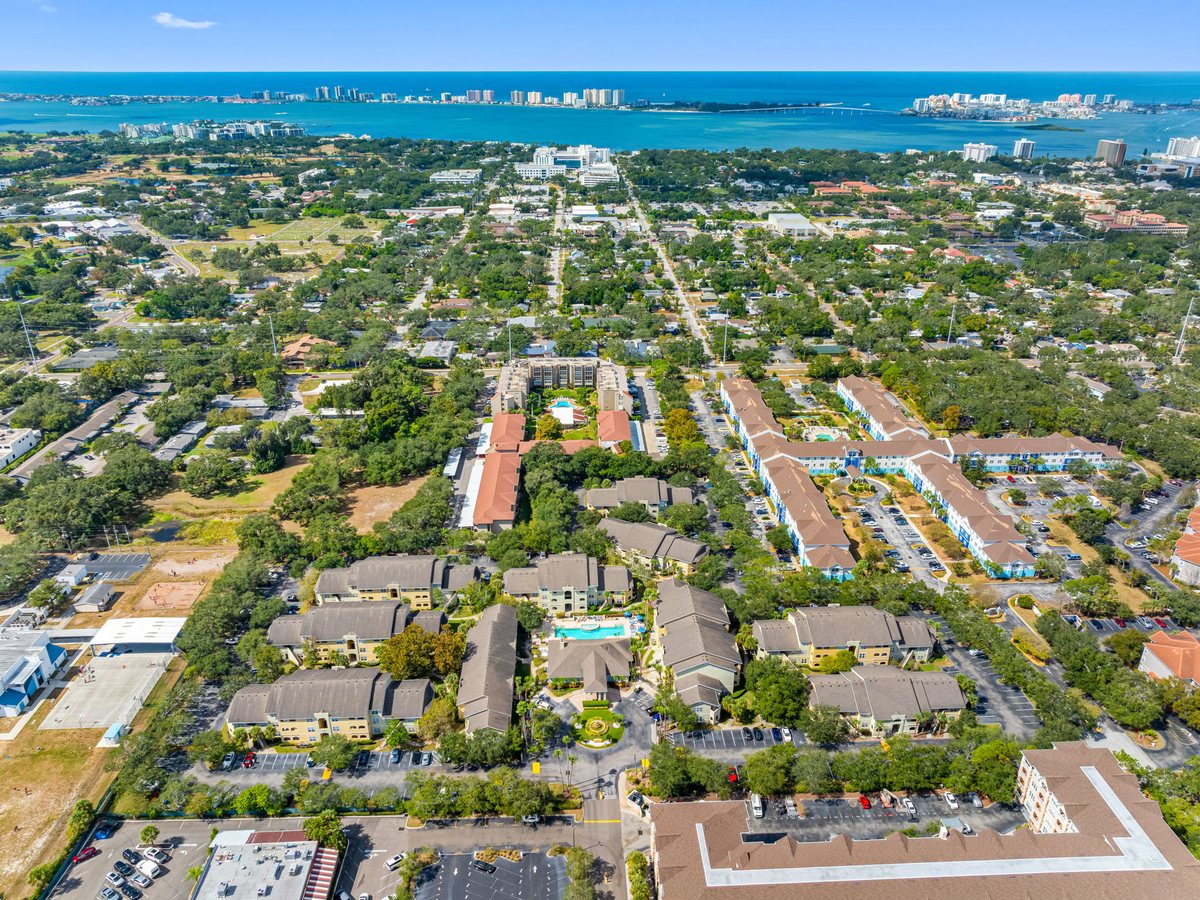
Pinellas County describes itself as “a unique mix of 25 governmental bodies” — one for each of its twenty-four cities and municipalities, and one for the almost one-third of the county that is unincorporated. Every one of them sets its own short-term rental laws, and most of them prohibit stays under thirty nights in residential zones.
There is no single Pinellas answer, and anyone who gives you one is guessing. Two properties a mile apart routinely sit under completely different regimes. Where nightly rentals do survive it is usually a narrow commercial or tourist-zoned strip rather than the residential interior, and which side of that line a given parcel falls on is not something you can tell by looking at it.
One example, so this isn't just an assertion. In the City of Clearwater's residential zones the minimum rental period is thirty-one days, or one calendar month, whichever is less. That is Ordinance 7105-03, on the books since 2003. Some beach properties operate nightly under documented grandfathered status or an approved transient-lodging use, but those are specific exceptions and they have paperwork behind them.
That is one jurisdiction out of twenty-five. The other twenty-four each have their own answer, and we're not going to pretend a web page can tell you which one applies to you.
Want the answer for your address, not just the county? The checker tells you on screen which of the 25 rulebooks your parcel is under. For an exact opinion on a specific property, ask us.
Two things decide what a property may do, and neither is the address on the deed. The first is the parcel's zoning designation within whichever jurisdiction actually contains it — and a Clearwater mailing address does not reliably mean the City of Clearwater. Parcels in unincorporated county sit under separate standards entirely.
The second is the condominium or homeowners association's governing documents, which can prohibit short stays even where the city permits them — and frequently do. An association's rules are enforceable against you regardless of what the city allows. Owners are caught by this constantly, because the city's answer feels like the final one. It isn't.
A parcel that was clear three years ago may not be clear now. In March 2025 the Pinellas County Commission adopted a short-term rental ordinance for the unincorporated county that hadn't existed the year before. Its rules are set out in full below.
Applications opened on 31 March 2025, and owners had to apply by 31 May, 30 June or 31 July depending on their ZIP code. Miss a window on a rule you didn't know had been written, and the calendar you'd already taken bookings on is the thing at risk. That ordinance covers the unincorporated county only — which is another way of saying the answer changed for some Pinellas owners and not for others, on the same day.
Keeping track of twenty-five jurisdictions' worth of that, permanently, is a job. It's most of ours.
These apply only if your parcel is in unincorporated Pinellas — not in any of the 24 cities and towns, whatever the mailing address says. Every figure below is taken from the county's own ordinance and program pages, linked under each item.
Any home or unit in unincorporated Pinellas rented for stays of under 30 days more than three times a year, or advertised for regular guest rental, needs a short-term rental Certificate of Use, renewed every year. A state DBPR vacation rental licence does not replace it.
Source: County Code s.22-319(f)–(g), Ordinance 25-15 · County FAQ
$450 for the certificate in the first year, paid as $250 with the application and $200 after an approved inspection, plus $150 for the initial inspection. Renewal is $450 a year, and each re-inspection is $100. Fees are non-refundable and set by county resolution.
One before the certificate is issued, then every two years as part of renewal. Inspectors check smoke and carbon monoxide alarms, that bedrooms meet the code, and pool safety. A failed item has to be corrected within 30 days, which the county can extend by up to 60.
Source: County Code s.22-319(g)(5) and (g)(11) · County inspections page
Two guests per bedroom plus two in one common area, and never more than 10 in total. Guests of every age count, children included.
Source: County Code s.22-319(h)(2) · County FAQ
One off-street space for every three occupants, rounded up. Each space must be at least 8 feet by 18 feet, and front-lawn parking doesn't count. Too few spaces lowers the occupancy you're allowed.
Source: County Code s.22-319(h)(4) · County FAQ
10 p.m. to 9 a.m., every day, or the county's general noise rules where those are stricter.
Source: County Code s.22-319(h)(3)
A one-page notice on or near the inside of the front door, giving the responsible party's name and phone number, maximum occupancy, maximum vehicles with a parking sketch, quiet hours, trash and recycling days, the nearest hospital, the after-hours hotline, and a reminder to respect the neighbours. The county publishes a fillable version.
Hotels, motels and bed-and-breakfasts; rentals of longer than a month; and homes rented short-term three times a year or fewer. Renting a room in the home you live in doesn't need a certificate, but a separate guest house or garage apartment on the same property does.
Source: County Code s.22-319(b)–(c) · Pinellas County short-term rental program
Not sure your parcel is unincorporated? A Clearwater, Largo or Seminole mailing address can sit in unincorporated county. Check the address and we'll tell you which rulebook applies, or ask us for an opinion on the property itself.
Clearwater requires a business tax receipt for every residential rental — including monthly ones, not just nightly. The part that surprises people sits in the application itself.
The application must name a local representative with a working phone number and a physical address in Pinellas, Hillsborough, Pasco, Manatee or Sarasota county. A post office box does not qualify.
If you live out of state or out of the country, you cannot satisfy that requirement on your own. Local representation isn't a convenience or a nice-to-have. It is a condition of operating legally.
This is one of the more practical reasons owners end up working with a local manager rather than running remotely. Under our full management plan we act as that local representative; it's included rather than billed separately.
This is the part that gets skipped. Owners spend months establishing that a property is allowed to be a short-term rental, get the answer they wanted, and stop there. Being permitted to do something is not the same as it being worth doing, and a legal short-term rental that loses money is still a rental that loses money.
When we look at an address we answer both questions: what it is permitted to do, and whether doing it is worth your money. The second one is where we're most likely to disagree with whoever sold you the idea.
Four of the units we own are in one Clearwater building, and we owned two more Clearwater homes before that. The rules on this page are ones we've been through with our own money, at the planning desk, in person.
We'll tell you free which jurisdiction your parcel actually sits in, whether nightly rentals are possible there at all, and — if it's Clearwater — whether you fall into one of the five categories that can rent nightly. The jurisdiction comes back on screen straight away; the rest of that answer follows by email, usually within a day. It costs nothing either way.
If you want the answer you'd actually act on — the zoning district, the full licence and tax stack, your association documents read against it, and what comparable properties really net — that's the Parcel Report, quoted before we start.
Knowing what a property is allowed to do is the first of three things we do. The next questions are usually whether the place is ready to list and who's going to run it.